
Why Aligarh: Inside India’s Brass and Hardware Capital
Aligarh has supplied India with locks, fittings and brassware for over a century. Here is what that concentration of skill actually means for what you buy.
A town that makes one thing well
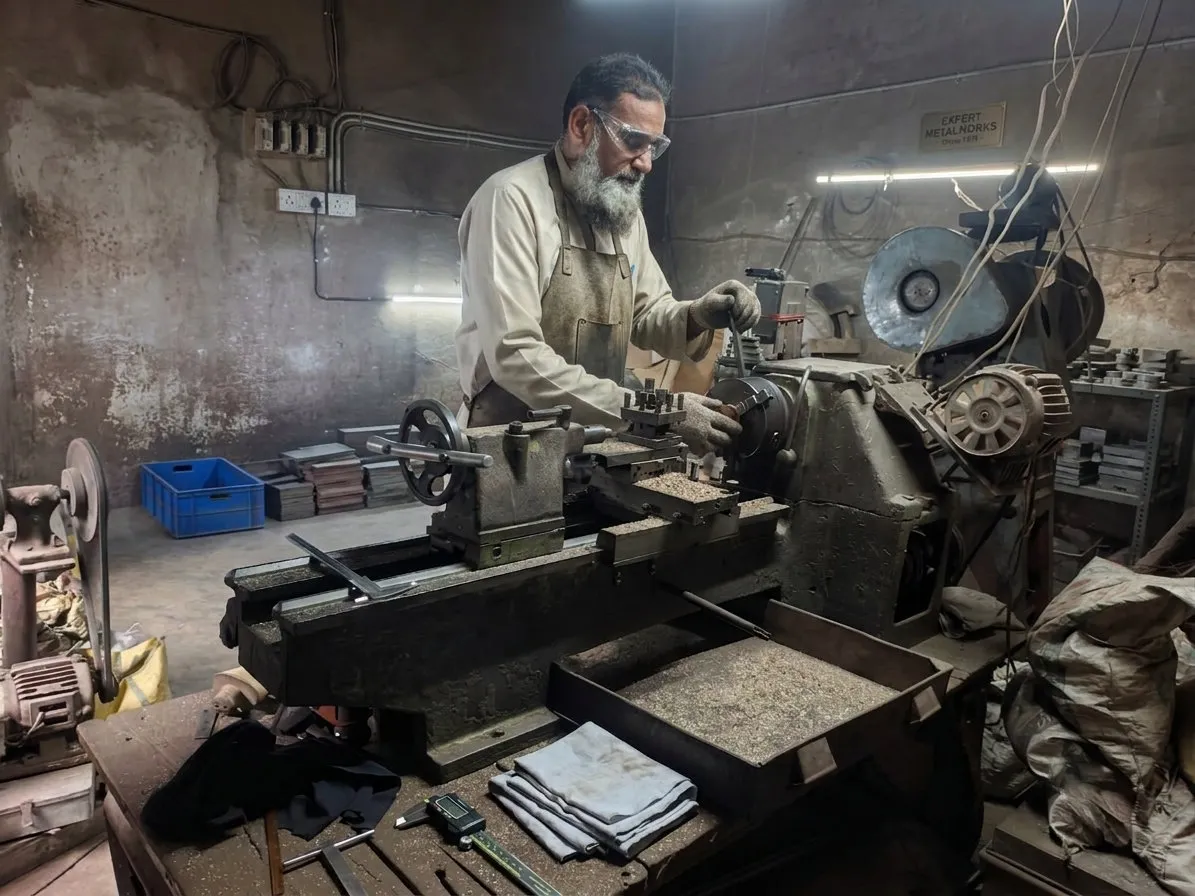
Aligarh, in western Uttar Pradesh, has been the centre of India’s hardware industry for generations. Locks, door fittings, brassware and architectural hardware have been made here at scale for over a century, long enough that the skill is embedded in the town rather than in any single company.
Industrial clusters like this behave differently to isolated factories. Skills pass between workshops and down through families. Specialist suppliers — casters, platers, finishers, toolmakers — sit within a few streets of each other. A problem that would stall a lone manufacturer for weeks gets solved locally in a day.
The practical result is depth. There are people in Aligarh who have done nothing but finish brass for thirty years, and that is not a capability you can hire into existence somewhere else.
What "made in Aligarh" actually signals
It is a claim worth reading carefully, because it is used loosely. A piece can be described as made in Aligarh when it was cast there and finished elsewhere, or when it simply passed through a trading office in the town.
What the phrase should mean is that the work — casting, chasing, finishing — happened inside that ecosystem, done by people who do it daily. That is what produces consistency across a batch and depth in a finish.
It also means the maker is reachable. When production sits in one town and the people running it are there, problems get seen rather than reported. That is a different quality-control model to inspecting containers on arrival.
How the craft actually works
Decorative brass moves through several distinct stages, each with its own specialists.
Casting gives the piece its form. Chasing — working the surface by hand with punches and chisels — is where detail is sharpened and where the difference between a competent piece and a good one is decided. Finishing then determines how the piece reads: a natural finish keeps brass bright and warm, while an antique finish darkens the recesses so that structure and depth become legible from across a room.
None of this is fully mechanisable, which is why handcrafted brass varies slightly between pieces. That variation is the evidence of the process, not a defect in it.
Where Leena sits in it
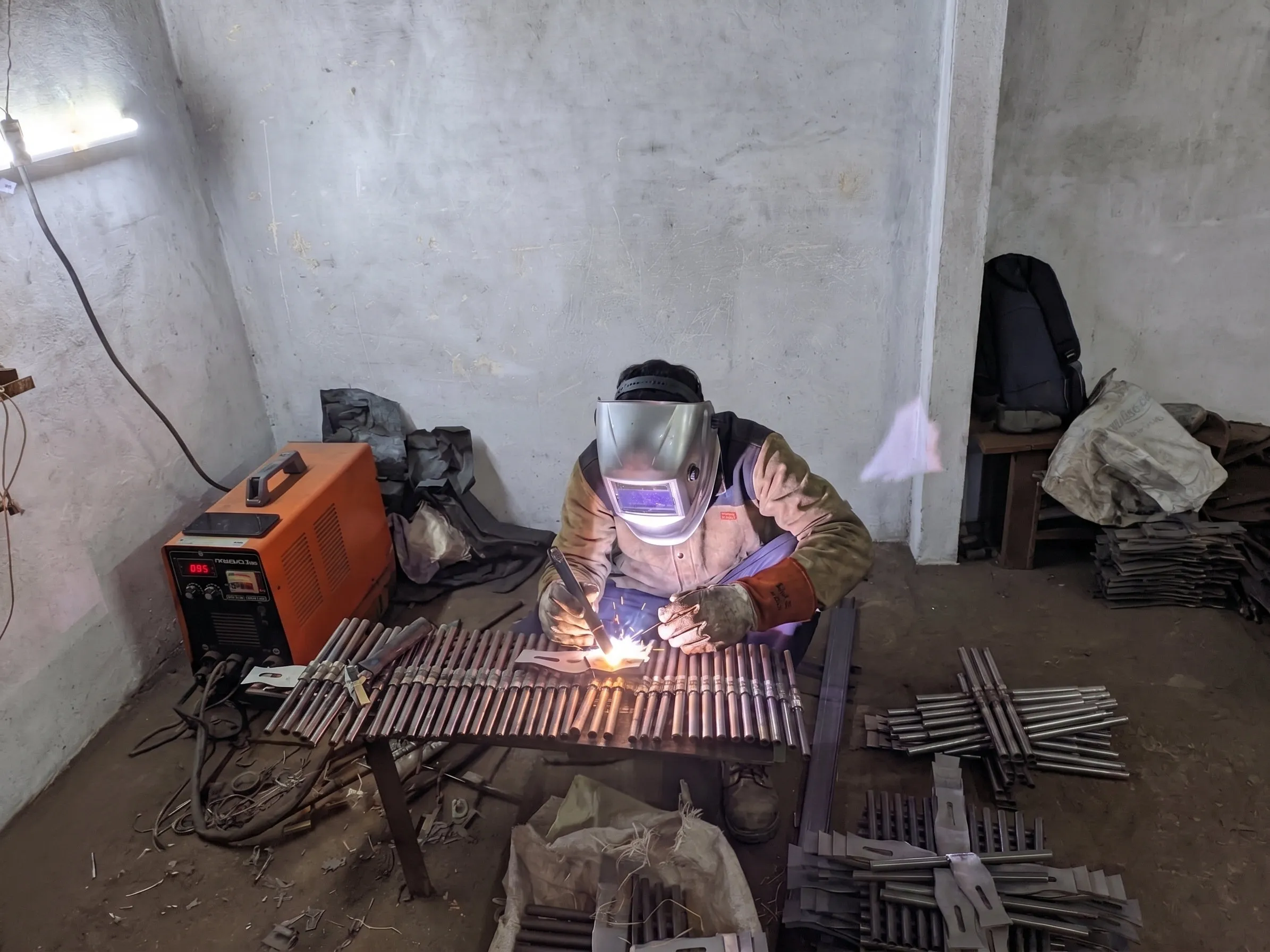
Leena Hardware was founded here in 1995 and is still family-run, now across two generations. Three decades in one town is long enough to know which workshops do which things well, and that knowledge is most of what separates a reliable catalogue from an unreliable one.
The principle the business was built on is that knowing how to identify quality matters as much as knowing how to produce it. In a cluster this deep, both are necessary — the capability exists in Aligarh, but so does the option to cut corners, and telling them apart is the job.
In practice that means nothing ships under the Leena name until the founders have inspected it. After thirty years, that check is the final filter.
Aligarh today: domestic and export
The town now serves two quite different markets. Domestically, Aligarh hardware reaches homes across India through dealer networks — ours spans 38+ outlets in 23+ cities, and the business has completed over 15,000 orders for more than 55,000 customers.
Internationally, Aligarh has become a serious alternative for buyers who previously sourced from further east, with manufacturers here supplying importers, distributors and OEM programmes across Europe, North America, the Gulf and Africa.
We run that side of the business separately. Nexus International handles B2B export and OEM manufacturing of door, window, railing and curtain hardware from the same base — direct factory supply, buyer-specific finishes, and full export documentation.
Exporting from AligarhNexus International — B2B hardware export & OEM →
Why it matters to what you buy
None of this is heritage for its own sake. A century of concentrated skill is why a hand-finished brass piece from Aligarh can be made in small quantities without the price collapsing into mass production or climbing into bespoke territory.
It is also why a minimum order of a single piece is possible at all. Where production is local and controlled rather than aggregated from elsewhere, one piece is a reasonable request rather than an exception.
Frequently asked questions
Why is Aligarh known as India’s hardware capital?
Aligarh has manufactured locks, door fittings, brassware and architectural hardware at scale for over a century. The concentration of specialist workshops — casters, platers, finishers and toolmakers within a few streets of each other — means skills pass between workshops and down through families, producing a depth of capability that is difficult to replicate elsewhere.
What does "made in Aligarh" actually mean?
It should mean the work — casting, chasing and finishing — happened within that ecosystem, done by people who do it daily. The phrase is sometimes used loosely for pieces merely cast there and finished elsewhere, or simply routed through a trading office, so it is worth asking a supplier what specifically was done where.
How is handcrafted brass decor made?
In stages. Casting gives the piece its form; chasing works the surface by hand with punches and chisels to sharpen detail; finishing determines how it reads, with a natural finish keeping brass bright and an antique finish darkening the recesses to make structure legible from a distance. None of it is fully mechanisable, which is why pieces vary slightly.
How long has Leena Hardware been in Aligarh?
Since 1995 — over 30 years, and still family-run across two generations. The business has completed 15,000+ orders for 55,000+ customers, supported by a dealer network of 38+ outlets across 23+ cities.