
Brass Kalpavriksha: Sizes, Symbolism and Where to Hang It
The Kalpavriksha is the piece people most often ask us about. Here is how the sizes differ, what the symbolism means, and how to choose the right one for a wall.
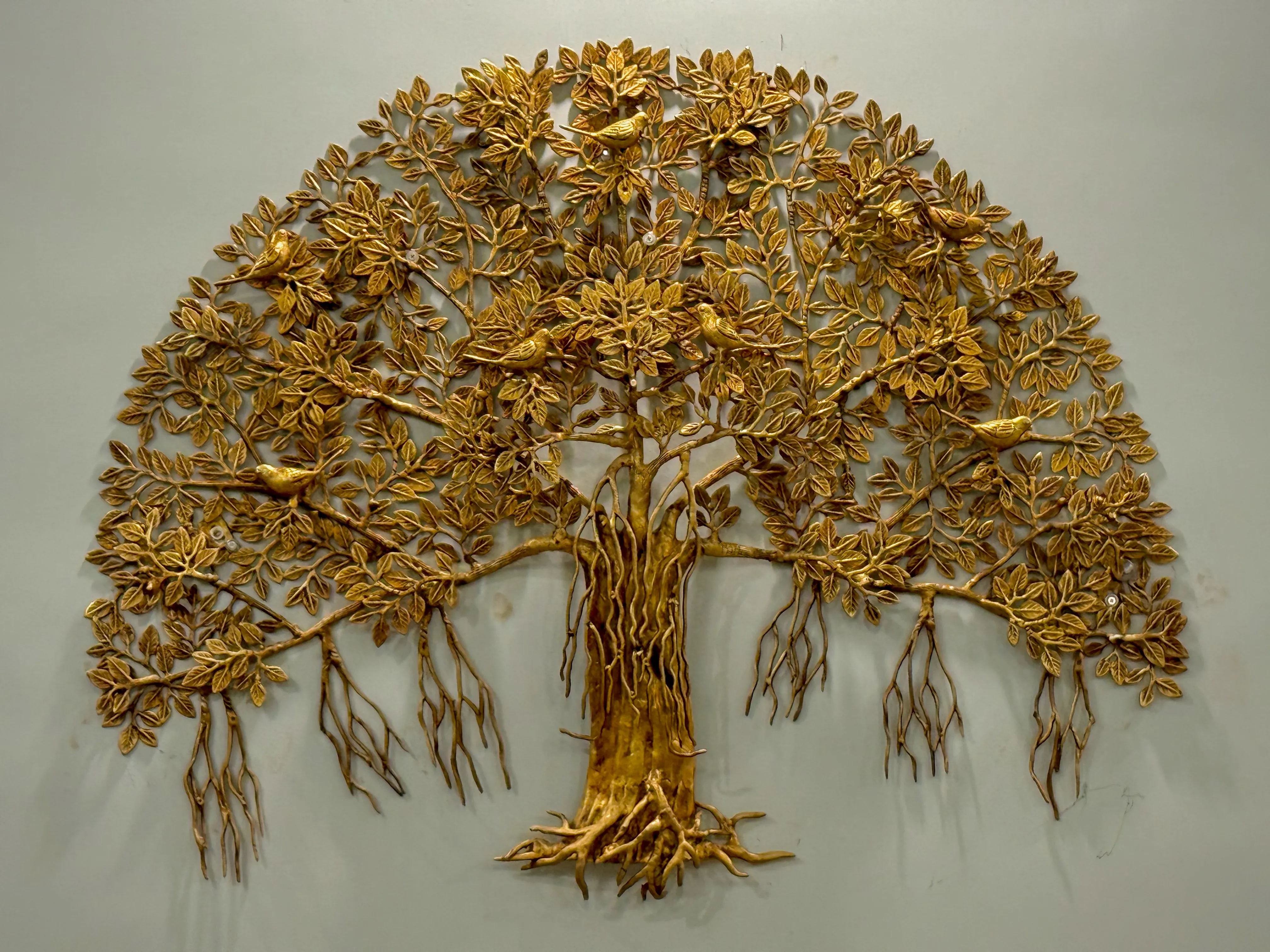
What the Kalpavriksha represents
The Kalpavriksha — the wish-fulfilling tree — appears across Indian tradition as a symbol of abundance, shelter and continuity. It is one of the oldest motifs in Indian decorative art, and one of the reasons it has stayed popular is that it reads as a tree first: even without the symbolism, it works as a piece of wall art.
That dual reading is why it suits entryways and living rooms as readily as prayer spaces. It carries meaning for those who want it and holds its own as sculpture for those who do not.
In brass, the motif gains something specific. The branching form catches light at different angles across the day, so the piece changes rather than sitting flat on the wall.
Sizes, and which wall each one suits
Kalpavriksha pieces vary widely in scale, and the most common buying mistake is choosing by photograph rather than by wall.
Our largest is a 48-inch piece measuring 48″ × 36″ and weighing around 20 kg — a statement piece intended for a double-height entryway, a hotel lobby, or a long living-room wall where it has room to breathe. At that scale it is the focal point of the room, not an accent.
Smaller wall-mounted versions suit standard residential walls, above a console or sideboard, or a prayer-room wall. Tabletop versions — including a variant with birds — work on shelves, sideboards and desks where wall mounting is not an option.
A rough rule: the piece should occupy roughly half to two-thirds the width of the furniture beneath it, and needs clear wall on either side. A 48-inch piece on a narrow wall reads as cramped no matter how good it is.
Wall-mounted or tabletop?
Wall-mounted pieces make more of the form — the branches read against the wall and cast shadow, which is most of the effect. They need a wall that can take the weight and a fixing that will hold it.
Tabletop pieces are freestanding and easier to place, move and reposition. They suit renters, shelving, and rooms where the walls are already busy. They also make more practical gifts, since the recipient does not need to drill anything.
For retailers, the two sell to different customers, and stocking one of each is usually more informative than stocking two sizes of the same format.
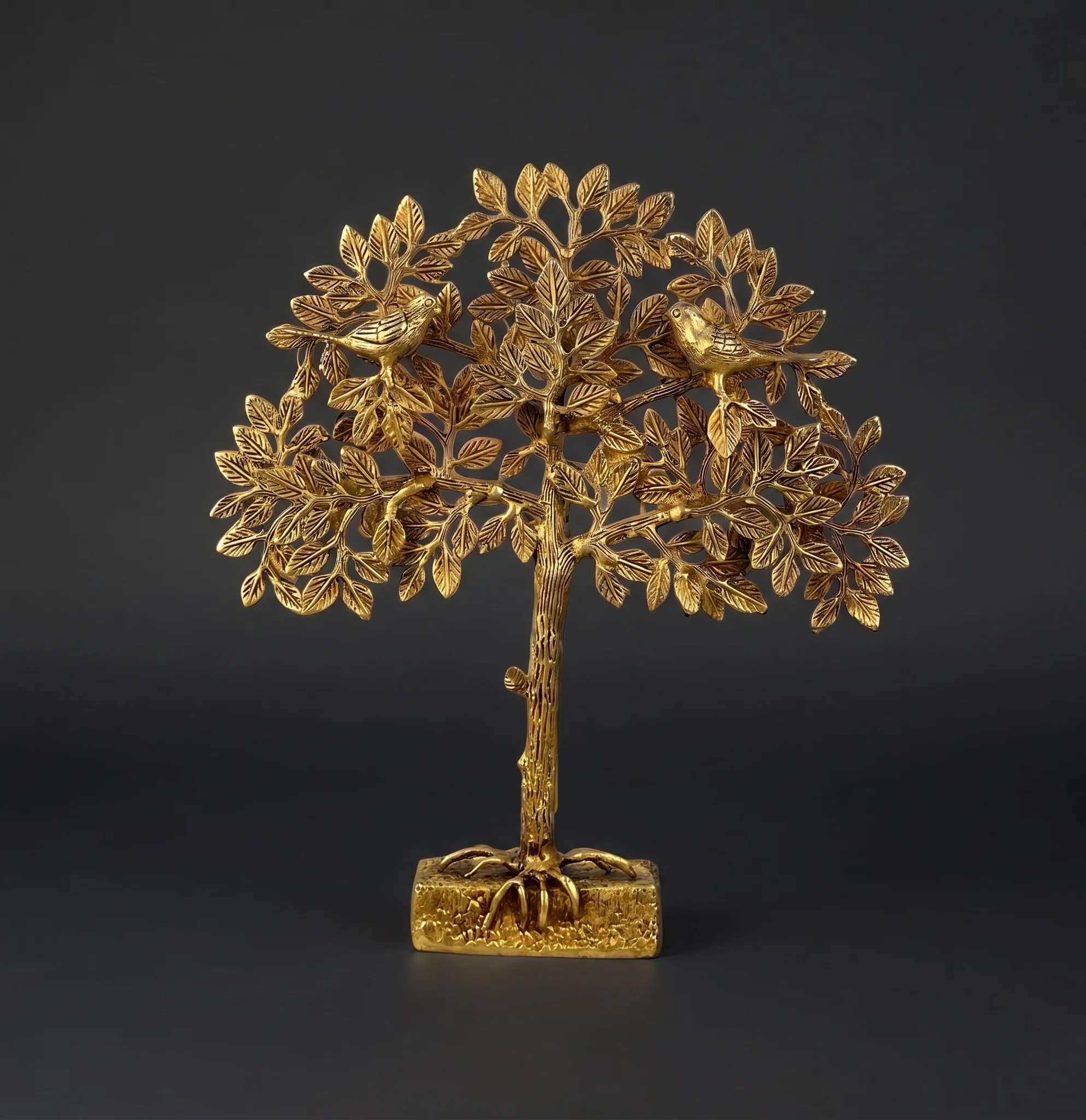
Natural or Antique finish
Every decorative piece we make is offered in two finishes, and the choice is more consequential than it first appears.
Natural keeps the warmer, brighter brass tone. It reads as contemporary and sits well against pale walls, white marble and modern interiors.
Antique darkens the recesses and leaves the raised surfaces lighter, which emphasises depth and detail. On a branching form like the Kalpavriksha it makes the structure far more legible from a distance, and it suits traditional interiors, wood, and warmer palettes.
If a piece is going on a busy or patterned wall, antique generally holds up better because the contrast does more of the work.
Weight, mounting and practical considerations
Solid brass is heavy, and this is the part buyers most often underestimate. A 20 kg wall piece is not a picture hook proposition — it needs fixing into masonry or a solid substrate with hardware rated well above the load, and on drywall it needs to be anchored into studs or a backing board.
It is worth deciding the mounting method before the piece arrives rather than after. For larger pieces we would always suggest professional installation; the piece will outlast the wall it is on, but only if it is fixed properly.
Larger pieces ship in solid wooden crates for exactly this reason — the weight that makes them feel substantial is also what makes them vulnerable in transit.
Living with it: care and patina
Brass changes over time. A natural finish will gradually deepen; an antique finish will settle further. This is not deterioration — it is the material behaving as brass does, and for most owners it improves the piece.
Care is deliberately simple: clean with a soft dry cotton cloth. Avoid harsh chemicals and metal polishing liquids, which strip the finish and leave a piece looking newer and flatter than it should.
If you want to slow the patina, keep it out of direct humidity. If you want to embrace it, do nothing at all.
Frequently asked questions
What size Kalpavriksha should I choose?
Match it to the wall, not the photograph. Our largest is 48″ × 36″ at around 20 kg, intended for entryways, hotel lobbies and long living-room walls. Smaller wall-mounted versions suit standard residential walls and prayer rooms, and tabletop versions work on shelves and sideboards. As a guide, the piece should span roughly half to two-thirds the width of any furniture beneath it.
How heavy is a brass Kalpavriksha, and how is it mounted?
The 48-inch piece weighs around 20 kg. It needs fixing into masonry or a solid substrate with hardware rated above that load — on drywall it must be anchored into studs or a backing board. For larger pieces we recommend professional installation, and they ship in solid wooden crates to protect them in transit.
Should I choose the Natural or Antique finish?
Natural keeps a brighter, warmer brass tone and suits contemporary interiors and pale walls. Antique darkens the recesses and emphasises depth, which makes a branching form far more legible from a distance and suits traditional or warmer interiors. On busy or patterned walls, antique generally holds up better.
How do I clean a brass Kalpavriksha?
Wipe with a soft dry cotton cloth. Do not use harsh chemicals or metal polishing liquids — they strip the finish. The natural patina that develops over time is part of the character of solid brass, not a fault.
Can I order a single Kalpavriksha?
Yes. The minimum order on decorative brass is one piece, so you can order a single item — whether you are a retailer testing the line or buying for your own home.